Weather across two valleys
Hampta Pass crosses from the wetter, greener Kullu Valley into Lahaul's colder rain-shadow landscape. Conditions can feel very different within one trekking day, and cloud, wind or showers can arrive quickly at altitude.
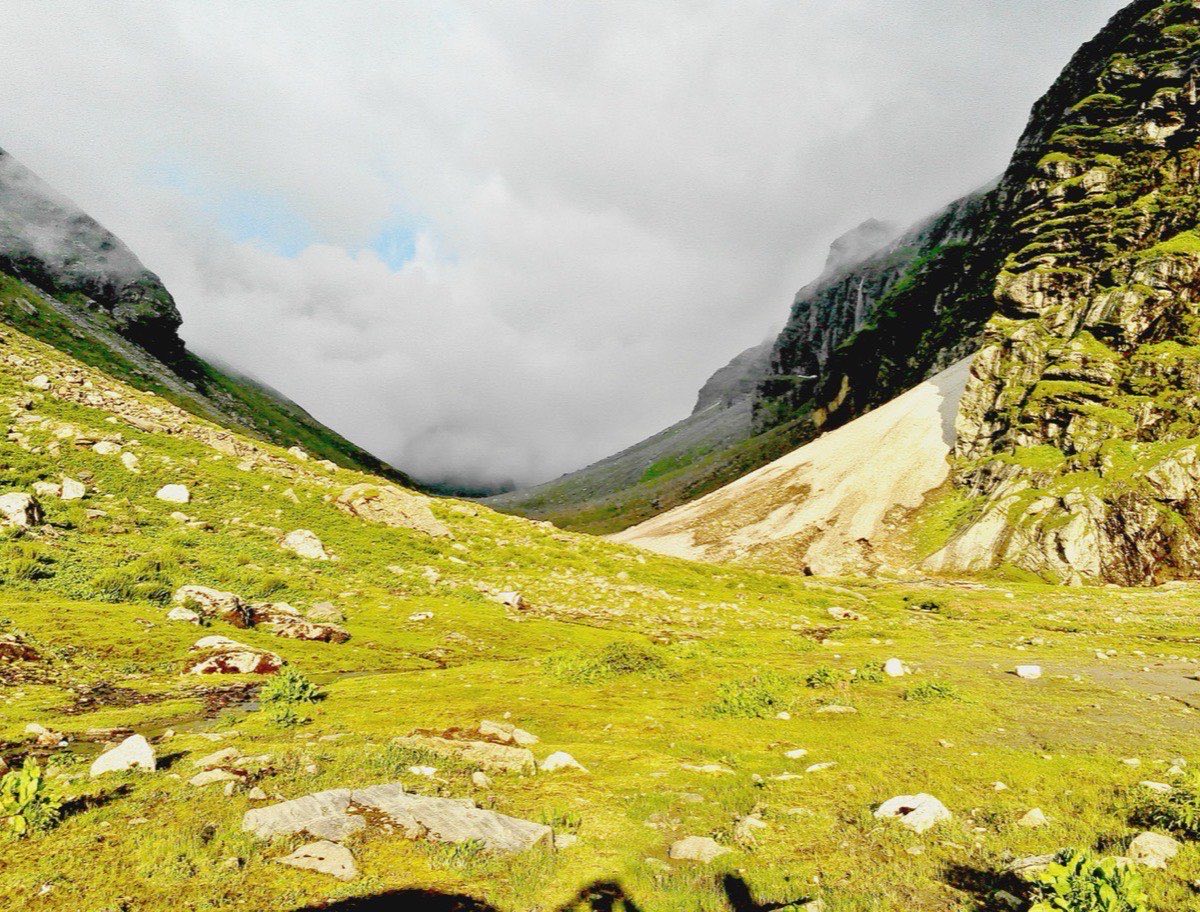
Conditions on the trail
A practical guide to Hampta Pass temperature and weather: day and night ranges, rain, snow and wind across the Kullu and Lahaul sides of the pass, month by month.
10–18°C
Typical daytime range
0–8°C
Typical night range
Jun–Sep
Usual season
Changeable
Mountain weather
Quick answer
Hampta Pass temperature usually runs around 10–18°C by day and 0–8°C by night at the higher camps, with rain on the Kullu side in July and August and possible snow near the pass in June and September. The Lahaul side runs drier, colder and windier than Manali on the same day, so check conditions for the pass itself, not just for Manali town.
Hampta Pass crosses from the wetter, greener Kullu Valley into Lahaul's colder rain-shadow landscape. Conditions can feel very different within one trekking day, and cloud, wind or showers can arrive quickly at altitude.
June often brings lingering snow near the pass. July and August are usually greener with a higher chance of rain on the Manali side. September commonly has cooler nights and clearer spells, but none of these patterns is guaranteed. Which pattern suits you decides the best time for the Hampta Pass Trek; June and July and August each have their own detailed guide.
Daytime walking can feel mild in sunshine, while exposed sections become cold quickly when wind or cloud builds. Night temperatures at higher camps may approach freezing. Carry layers rather than relying on one heavy garment, and use the Hampta Pass packing list to plan them.
A Manali forecast does not represent conditions at the pass. Check a current mountain forecast close to departure and follow the on-ground trek leader's judgement when conditions change.
The Pir Panjal range blocks most monsoon cloud from reaching Lahaul. On the Manali side of the Hampta Pass Trek you may walk through drizzle and thick forest humidity, then descend to Shea Goru the next day into dry, dusty, wind-scoured terrain. Pack for both climates in the same rucksack.
Teams usually start the pass day very early because wind and cloud tend to build after late morning, and because afternoon snowmelt raises the stream crossings on the descent. A weather delay does not usually cancel the trek. Leaders commonly shift the schedule by a few hours or hold at Balu ka Ghera until the crossing is safe.
Manali town sits near 6,700 ft, while the pass itself is near 14,100 ft, so a town forecast typically understates cold and wind by a wide margin. There is no single authoritative live weather feed for the pass itself. Look at a mountain point forecast for roughly 4,000 m, check freezing level and wind speed rather than only rain probability, and treat anything more than three days out as a trend rather than a plan.
Himachal's monsoon months occasionally bring more than a single wet day. In some recent seasons, heavy rain and landslides in the Kullu-Manali region have led established operators to postpone or cancel scheduled Hampta Pass departures entirely, rather than risk an unsafe crossing or a blocked approach road. If your dates fall in July or August, ask your operator what their written weather contingency and refund policy is before you pay, and keep your onward travel from Manali changeable.
Add layers before you feel cold, keep rain gear at the top of your pack, and keep one dry set of clothes sealed for camp. Report shivering, headache or unusual fatigue early. Every route decision on the pass day belongs to the on-ground trek leader.
| Month | Day / night (approx.) | Rain and snow | What it feels like |
|---|---|---|---|
| Mid-June | 12–18°C / 0–5°C | Snow patches near the pass | Fresh trail, cold camps, dramatic snow crossing |
| July | 12–18°C / 3–8°C | Frequent monsoon showers | Green valleys, waterfalls, wet ground |
| August | 10–17°C / 3–8°C | Showers and low cloud | Lush meadows, strong streams, variable views |
| September | 8–15°C / -2–5°C | Early snow possible | Clearer air, colder nights, shorter days |
Figures are indicative planning ranges collected from typical season reports, not a forecast.
Common questions
Usually yes, in patches near the pass and sometimes on the final approach. The quantity varies each year with winter snowfall and the melt rate.
Departures commonly run through July and August. Rain is likely on the Manali side, and road disruption on the Manali highway is the more common problem rather than the trail itself.
Expect roughly 0–8°C at higher camps, occasionally below freezing in June and late September. Sleeping bags are usually provided on guided departures. Confirm the comfort rating, and see the packing list for the layers to bring.
Rain alone rarely does. Heavy snow, whiteout, or unsafe river crossings can delay or reroute the day, which is why a flexible return buffer is sensible.
There is no dedicated live feed for the pass. The most useful approach is a mountain point forecast set to roughly 4,000 m elevation, checked two to three days out and again the morning of departure, alongside the district-level weather bulletin for Kullu and Lahaul and Spiti.
Yes, in some recent monsoon seasons. Heavy rain and landslides in the Kullu-Manali region have led operators to postpone or cancel scheduled batches rather than risk an unsafe crossing. If your dates fall in July or August, confirm your operator's weather contingency and refund policy before you pay.
Trek routes, weather, road access, campsites and Chandratal accessibility can change due to weather, trail conditions, local restrictions and operational decisions. Confirm current conditions and itinerary details before departure.
Plan with confidence
Get current dates, the latest trail update and a clear inclusion list before you book.