What makes it moderate
The trail is not technically difficult, but the pass day combines sustained ascent, altitude, possible snow and a long descent. River crossings and slippery sections may add challenge.
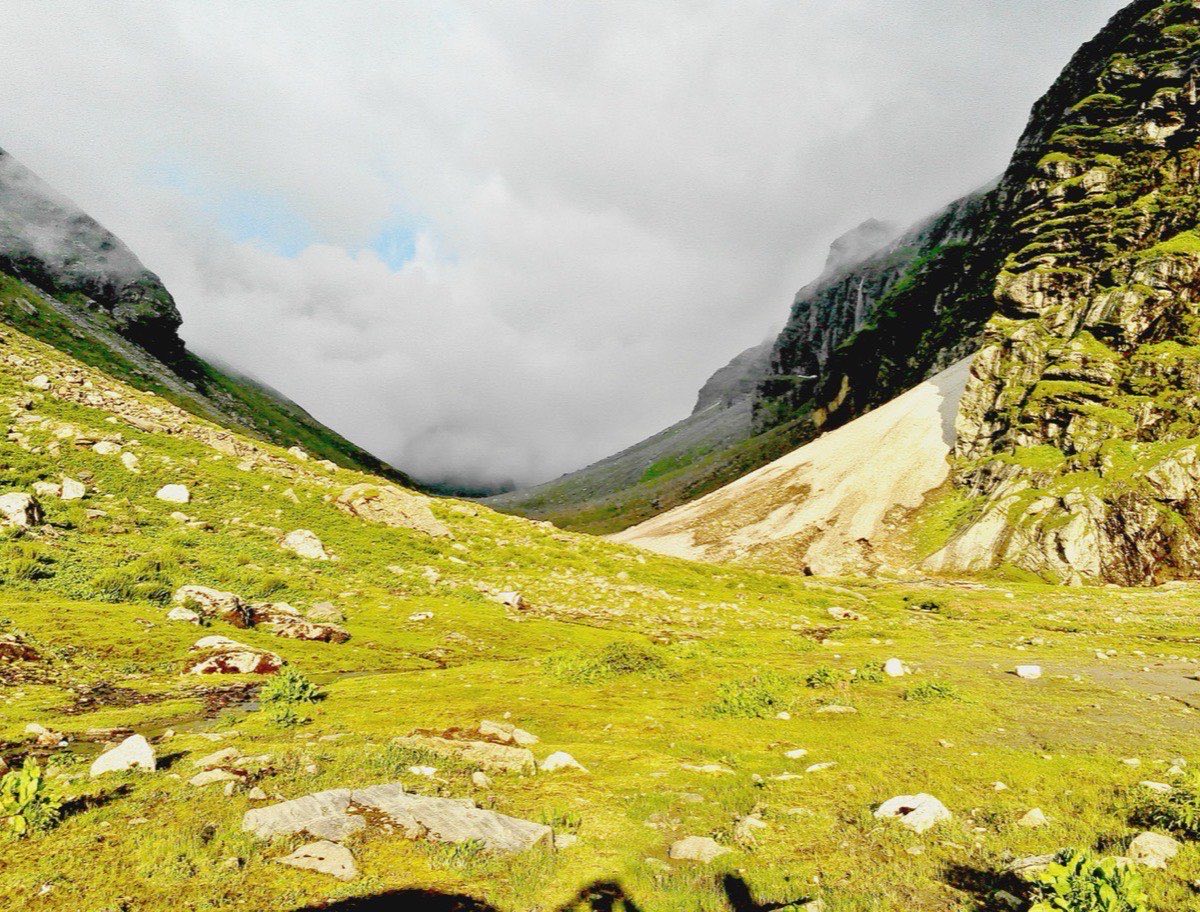
Know the challenge
Hampta Pass is generally rated moderate: approachable for prepared first-time trekkers, but demanding because of altitude, long walking days and variable terrain.
Moderate
Overall grade
7–9 hrs
Longest walking day
14,100 ft
Highest point
4–6 weeks
Suggested training
Quick answer
Hampta Pass is graded moderate. Technical climbing skill is not required, but you need to walk for several hours on consecutive days, sleep at camps up to 12,900 ft, cross streams and manage a long pass day of roughly 9 km with about 2,200 ft of ascent followed by a steep descent. Guided groups typically complete the pass day in seven to nine hours; early-season snow, poor conditions or an unguided pace can extend this considerably, and some independent trekkers have reported taking ten hours or more. Fit first-time trekkers complete it regularly with four to six weeks of preparation.
The trail is not technically difficult, but the pass day combines sustained ascent, altitude, possible snow and a long descent. River crossings and slippery sections may add challenge.
Active beginners can complete the trek with consistent preparation and realistic pacing. Previous high-altitude experience helps but is not essential when the itinerary, fitness and team support are appropriate.
Build gradually with brisk walks, stairs and basic leg and core strength. The aim is to stay comfortable for several hours, not to chase speed. The four-week benchmark below turns this into a weekly routine.
Anyone can feel the effects of altitude. Follow the trek leader's pace, hydrate normally and report symptoms early. The altitude profile shows how gradually the trek gains height. This guide is not medical advice; discuss personal health concerns with a qualified clinician.
On the Hampta Pass Trek you start before sunrise, climb boulder field and possible snow to the saddle, then lose height quickly on loose scree into Lahaul. The descent, not the ascent, is where most trekkers find their knees and concentration tested. Trekking poles help considerably. The itinerary shows how the day fits into the five.
Guided departures generally budget seven to nine hours for the pass day, including rest stops and photographs at the saddle. This figure assumes a paced group, settled weather and a clear trail. Independent trekkers moving at their own pace, or anyone caught by late-season snow or a slow river crossing, have reported considerably longer days; at least one detailed account describes an early-season solo crossing taking close to eleven hours to cover the same nine kilometres. Build slack into your return travel for this reason.
Between Shea Goru and Chatru the route crosses glacier-fed streams that can be knee-deep and very cold. Crossings are made early in the day under the trek team's direction, usually in sandals or dedicated crossing shoes, and the line taken changes with water level.
Consider talking to a doctor before booking if you have cardiac or respiratory conditions, uncontrolled blood pressure, recent surgery, or a previous episode of altitude sickness. This page is general information, not medical advice.
A useful target before departure is walking 5 km in about 40 minutes comfortably, plus one longer weekend walk of 8–10 km with a light pack.
| Day | Distance | Hours | Effort |
|---|---|---|---|
| Jobra – Chika | ≈2 km | 2 | Easy, altitude introduction |
| Chika – Balu ka Ghera | ≈8 km | 5–6 | Moderate, steady gain |
| Balu ka Ghera – Shea Goru | ≈9 km | 7–9 | Hard, the crux day |
| Shea Goru – Chatru | ≈5 km | 4–5 | Moderate, rocky and cold |
Common questions
Hampta is a step up: higher, longer, with a committing crossing and descent into a remote valley rather than a summit-and-return day.
It is run routinely by registered operators with trained leaders and safety equipment. The main risks are altitude, weather and stream crossings, all managed by pacing and on-ground judgement.
Guided groups generally budget seven to nine hours, including breaks. Early-season snow, an unguided pace or a slow river crossing on the Lahaul side can extend this well beyond that; build a buffer into your plans rather than assuming the shortest figure.
More common than many first-time trekkers expect, though usually mild. Trek leaders have reported that a significant share of a group, sometimes close to half, feel some combination of headache, nausea or poor sleep at the higher camps. This is consistent with how quickly the itinerary gains height, and it is a normal response provided symptoms stay mild and are reported to the leader.
It is done. Several independent trekkers have completed Hampta Pass alone in recent seasons without an agency. In practice this means arranging your own permit (solo applicants have reported forest staff declining to issue one, with no checkpoint on the trail to enforce it), carrying your own camping and safety gear, and accepting that the route-finding support, medical backup and paced schedule a guided team provides will not be there. It is more committing and riskier than joining a guided group, especially for a first high-altitude trek, but it is not impossible for an experienced, self-sufficient hiker.
Evacuation is usually on foot or pony toward the nearest road head, which can take hours. Tell your leader at the first sign of difficulty rather than pushing on.
Trek routes, weather, road access, campsites and Chandratal accessibility can change due to weather, trail conditions, local restrictions and operational decisions. Confirm current conditions and itinerary details before departure.
Continue planning
Plan with confidence
Get current dates, the latest trail update and a clear inclusion list before you book.