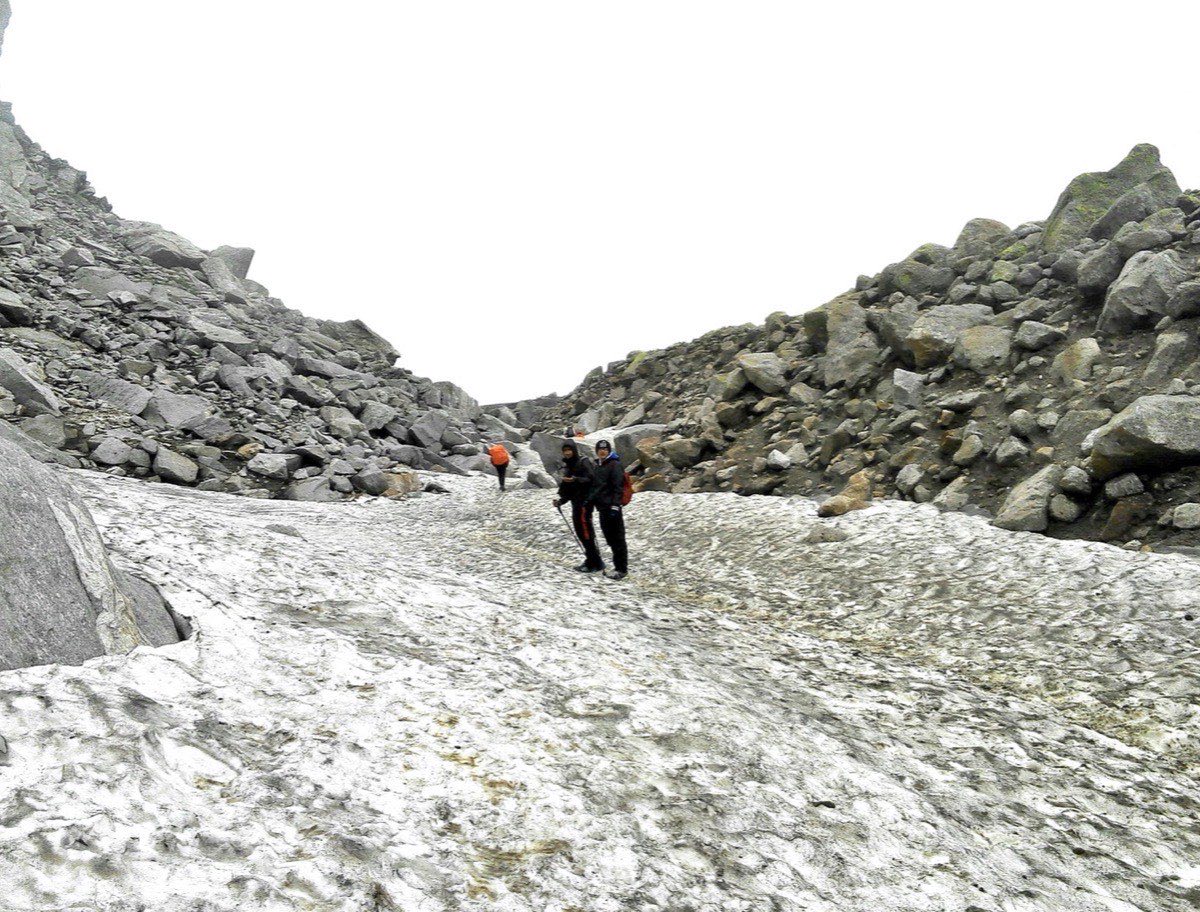
Hampta Pass reaches approximately 14,100 ft (about 4,300 m), after a staged ascent from Manali through progressively higher camps.
14,100 ft
Pass altitude
4,300 m
Approximate metric
6,700 ft
Manali
11,900 ft
Balu ka Ghera
Quick answer
Hampta Pass stands at approximately 14,100 ft (4,300 m) above sea level, though figures reported elsewhere range from about 14,009 ft to 14,107 ft. The trek starts near Jobra at about 9,800 ft, camps at Chika (≈10,100 ft), Balu ka Ghera (≈11,900 ft) and Shea Goru (≈12,900 ft), and finishes at Chatru near 11,000 ft.
01
Maximum altitude
Published figures vary by source: some list the pass at around 14,009 ft, others closer to 14,107 ft, and many operators round to 14,100 ft (4,300 m), the figure used on this page. Treat any of these as an approximate planning altitude rather than survey precision.
02
A staged ascent
The route rises from Manali at roughly 6,700 ft to Jobra around 9,800 ft, Chika around 10,100 ft and Balu ka Ghera around 11,900 ft before the pass crossing. The day-by-day itinerary shows where each camp falls.
03
Day-wise profile
The largest altitude gain occurs on the pass day, followed by a substantial descent to Shea Goru. This is why steady pacing, appropriate hydration and communicating symptoms matter.
04
Understanding altitude
Fitness does not prevent altitude illness. Follow the trek team's safety plan and seek qualified medical advice for personal concerns or previous altitude problems. Our difficulty guide explains how the altitude affects each day.
05
How the body responds at 14,100 ft
Oxygen availability at the pass is roughly 60 percent of sea level. Mild breathlessness, a faster resting pulse and broken sleep at high camps are normal. Persistent headache, nausea, dizziness or loss of appetite are not, and should be reported to the trek leader immediately.
06
How common altitude symptoms actually are
Mild altitude symptoms are common and expected on a trek that gains height this quickly. Trek leaders have reported that a meaningful share of a group, sometimes close to half, feel a headache, nausea or disturbed sleep at the higher camps, most often at Balu ka Ghera and Shea Goru. This is consistent with how fast the standard itinerary gains height, from around 6,700 ft in Manali to above 12,000 ft within two to three days. It is one reason a five-day itinerary with a paced ascent is safer than a compressed version that climbs faster.
07
Why the profile is well designed
You gain height gradually and, crucially, sleep 1,200 ft lower at Shea Goru than the pass you crossed that morning. Climbing high and sleeping low is one reason the Hampta Pass Trek suits first-time high-altitude trekkers.
08
Acclimatising before you start
Spending a night in Manali before day one helps. Hydrate steadily, avoid alcohol and heavy exertion on arrival, and walk gently rather than resting completely on the day before the trek. The weather guide explains why the pass is so much colder than town.
09
How it compares
Hampta Pass at 14,100 ft sits above Kedarkantha (≈12,500 ft), at roughly the same height as Bhrigu Lake near Manali (≈14,100 ft), and below Stok Kangri or Rupin Pass. It is a genuine high-altitude objective without being an expedition.
Altitude profile
Altitude profile
Point
Feet
Metres
Manali
6,700 ft
2,050 m
Jobra
9,800 ft
2,990 m
Chika
10,100 ft
3,080 m
Balu ka Ghera
11,900 ft
3,630 m
Hampta Pass
14,100 ft
4,300 m
Shea Goru
12,900 ft
3,930 m
Chatru
11,000 ft
3,350 m
Chandratal (optional)
14,100 ft
4,300 m
Published figures vary by map and source; treat these as approximate planning altitudes.
Common questions
Asked before booking.
What is Hampta Pass height in metres?
About 4,300 m, commonly cited between 4,270 m and 4,300 m depending on the source.
Why do different websites give different altitude figures for Hampta Pass?
Because there is no single official survey figure that every publisher uses. Figures between about 14,009 ft and 14,107 ft all appear across maps, operator sites and trekking blogs. The differences are too small to matter for planning; treat any of them as approximate.
Is altitude sickness common here?
Mild symptoms are common, and trek leaders have reported that close to half of a group can feel some effect at the higher camps. Serious cases are uncommon on a well-paced five-day itinerary, and teams normally carry oxygen and an oximeter.
Does fitness prevent altitude sickness?
No. Fit trekkers are affected too. Pace, hydration and honest symptom reporting matter more than fitness. See how difficult the trek is for how to prepare.
What is the highest camp?
Shea Goru at roughly 12,900 ft, reached on the evening of the pass crossing.
Trek routes, weather, road access, campsites and Chandratal accessibility can change due to weather, trail conditions, local restrictions and operational decisions. Confirm current conditions and itinerary details before departure.